Someone can look excellent in a clinic and still be unprepared for sport.
They may have good range of motion, little pain, respectable strength numbers, and a clean-looking hop. Then they return to an environment with speed, fatigue, opponents, decisions, contact, imperfect positions, and consequences. The problem is not that the clinic work was useless. The problem is that it was only part of the job.
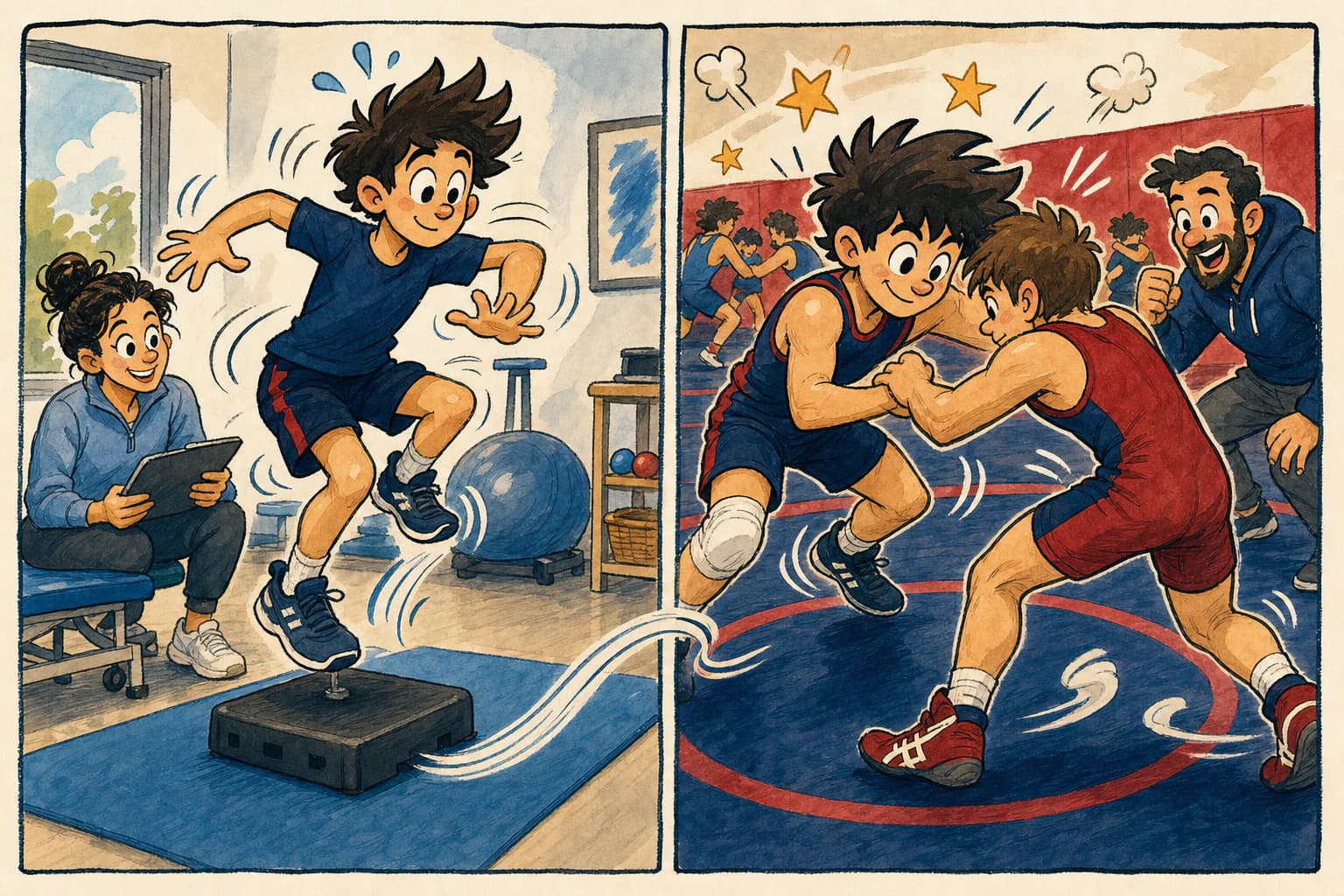
I am a Registered Kinesiologist in Ontario, a former coach, and I have worked in sports medicine with wrestlers. That experience shaped a simple view of rehabilitation: respect the person, their history and biology, and the demands they need to return to. Do what the situation requires. Protocols can provide important safety guardrails, but they cannot replace assessment or an understanding of the athlete and the destination.
The short version
Pain-free is not the finish line
Feeling better and passing tests matter, but they do not recreate practice, fatigue, decisions, contact, or competition.
Rebuild capacity and participation
Develop the physical qualities that support the sport while gradually restoring meaningful parts of the sport itself.
Make the plan together
The athlete, coach, and clinician each hold information the others need. Progress is safer and more useful when they communicate.
My working pathway
- 1.Examine
- 2.Manage constraints
- 3.Build qualities
- 4.Train the sport
- 5.Participate
- 6.Compete
Those stages overlap. People can often begin a modified version of sport before every impairment has disappeared. The point is not to rush. It is to avoid treating rehabilitation and sport as two worlds separated by a clearance date.
Why the right amount of challenge matters
Your body adapts to what you repeatedly ask it to do. Bone, tendon, muscle, fitness, and coordination can all change with training. Research on bone adaptation and tendon mechanobiology describes complex biology, but the practical point is straightforward: the amount, type, and timing of physical stress matter. So do healing, sleep, stress, training history, and the person's ability to recover.
Too little challenge may not build what the athlete needs. Too much, too soon, or too often may exceed what they can currently tolerate. The useful amount is not fixed; it changes as the athlete heals, trains, recovers, and returns to more demanding activity.
That leads to the first two steps of my approach: examine the situation, then manage its constraints. In plain language, calm things down enough that we can start building them back up. That may mean protecting a healing structure, reducing an aggravating exposure, addressing a medical concern, or temporarily changing how an athlete trains. It rarely means the entire person must stop.
Training qualities is not the same as training the sport
This distinction is central to how I work.
Strength-and-conditioning training develops useful physical qualities: strength, speed, endurance, mobility, coordination, power, and the ability to repeat hard efforts. These qualities should be organized around the athlete and their sport rather than a one-size-fits-all program ( Human Kinetics).
Gym exercises do not need to look like the sport. A squat does not need to resemble a wrestling shot. A row does not need to imitate hand fighting. A cable exercise does not become functional because it looks vaguely like a throw.
Exercise selection should respect medical constraints and target qualities that matter for success. But disguising a gym exercise as a sport skill can produce a poor version of both.
Sport training has a different job. It develops technique, timing, perception, decision-making, interaction, and adaptability. A wrestler has to read pressure and position, respond to an opponent, and produce the right action at the right time. Those abilities cannot be fully recreated with a band or cable. They require wrestling.
Rehabilitation should include two connected streams:
- 1. Train the qualities that support the sport.
- 2. Practise the sport within the athlete's current constraints.
The research on on-field rehabilitation makes a similar distinction by including physical conditioning, movement, sport skills, and progressive training exposure. The control-chaos continuum describes a gradual move from predictable work toward faster, reactive, less controlled situations. These are useful frameworks, not universal recipes.
Sport exposure can often begin early in a reduced form: technical rehearsal, controlled footwork, positional work, lower-speed practice, fewer repetitions, a cooperative partner, or a smaller range of options. What is appropriate depends on the diagnosis and the athlete. After some injuries, especially concussion or conditions with strict healing constraints, the safety rules are different. The current concussion consensus, for example, uses condition-specific staged progression and clinical oversight.
The principle is not “do your sport no matter what.” It is “preserve and rebuild as much meaningful participation as the situation safely allows.”
A young-athlete example
Return to wrestling one layer at a time
Imagine a 16-year-old wrestler returning after a knee injury. Their gym work may rebuild leg strength, landing control, power, and conditioning. At the same time, appropriate parts of practice can return in stages.
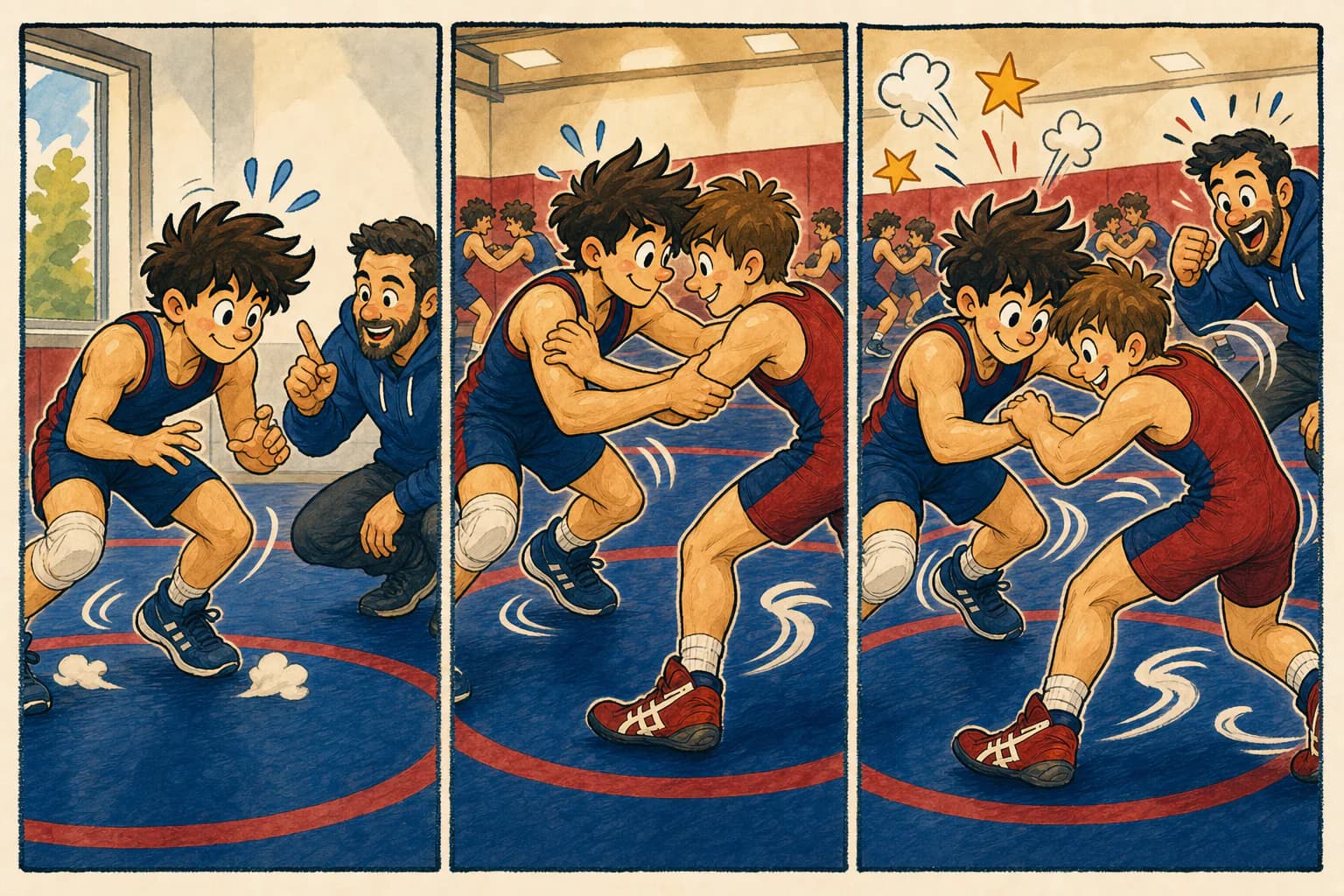
1.Start controlled
Solo stance and motion, planned footwork, or a limited drill with no surprise attack.
2.Add cooperation and choices
A partner provides agreed resistance, then a small number of realistic options to read and answer.
3.Build toward full practice
Live exchanges, complete rounds, repeated practices, and finally competition demands return as the athlete demonstrates readiness.
This is an illustration, not a return-to-sport recipe. The right starting point and safety rules depend on the injury, the athlete, and guidance from the appropriate health professional.
Start with the destination
When someone tells me they want to get back, I need to know what that means.
What were they doing before? What are they doing now? What sport, position, level, schedule, surface, and training environment are they returning to? What does a full practice require? What happens late in a match or after several hard days? What does their job or home life add to the total?
Return-to-sport experts increasingly describe return as a continuum rather than a single clearance event. The Bern consensus separates return to participation, return to sport, and return to performance. The PAASS ankle framework includes pain, impairments, athlete perception, sensorimotor control, and sport performance. The details differ by condition, but the common message is clear: readiness has several dimensions.
A strength target without a demand analysis is just a number. A running goal without a required speed, volume, surface, and recovery schedule is incomplete. Rehabilitation becomes more useful when we work backward from the destination.
Tests are tools, not verdicts
Strength testing, force plates, video, and movement analysis can all reveal something useful. No single test can establish readiness or remove risk.
A test measures a piece of the problem under particular conditions. It may show that force has improved or a task is better tolerated. It may reveal a compensation worth training. It cannot reproduce every decision, collision, fatigue state, or bad position the athlete will encounter.
Even familiar numbers need context. Research shows that limb-symmetry scores can overestimate recovery if the other limb has also lost capacity. Athletes can achieve symmetrical hop distance while still showing meaningful differences in how the knee produces and absorbs work ( Kotsifaki and colleagues). That does not make hop tests or symmetry useless. It makes them information rather than permission slips.
The most valuable test is often the whole progression: how the athlete responds as the stimulus becomes more demanding, specific, uncertain, and repeatable. What happens during the session, later that day, the next morning, and across several weeks?
Pain is information, not a moral judgment
Pain is real. It is also not a direct meter of tissue damage or proof that someone moved wrong. Pain reflects the person, the tissue, the nervous system, the task, their expectations, and the environment. A useful sports medicine paper puts it plainly: there is more to pain than tissue damage.
I often use Greg Lehman's cup analogy. Training, work, poor sleep, stress, symptoms, and life all fill the cup. When the total exceeds current capacity, it can overflow. We can remove some load, build a bigger cup, or do both.
When total load exceeds current capacity, symptoms may rise.
Reduce some loadModify what is currently overflowing the cup.
Build more capacityGradually prepare for what needs to return.
This is an analogy, not a diagnosis. New trauma, severe or rapidly changing symptoms, neurological signs, illness, and other warning signs need appropriate assessment. But for many rehabilitation problems, symptoms help us adjust the dose rather than automatically banning movement. In Achilles tendinopathy, for example, continued activity guided by a pain-monitoring model did not worsen outcomes in a randomized trial ( Silbernagel and colleagues). That finding is condition-specific, but it illustrates the difference between monitoring pain and fearing all pain.
Progress, hold, or step back
There is no universal rule. I consider the person, injury, phase, timeline, previous and current abilities, sport demands, and response to recent exposure.
Progress
Add one useful challenge, such as speed, repetitions, choices, fatigue, or contact.
Hold
Repeat the current level to build capacity, skill, confidence, or consistency.
Step back
Reduce a variable and learn from the response. This is a decision, not a failure.
Confidence belongs in this decision. If someone is physically capable but hesitant, explanation helps, but successful action is often better evidence. We can create a manageable version of the feared task and build from there. Video or a mirror can sometimes help a person compare what they fear with what actually happened. If someone is highly confident but underprepared, confidence does not replace capacity or exposure. Published research likewise treats psychological readiness as important but only one part of return.
Young athletes may also worry about losing a starting position, missing selection, letting down a coach, or looking weak in front of teammates. Hiding symptoms or agreeing to a step you do not understand does not help the team. Speaking up gives everyone better information and is part of taking rehabilitation seriously.
Build a plan everyone can use
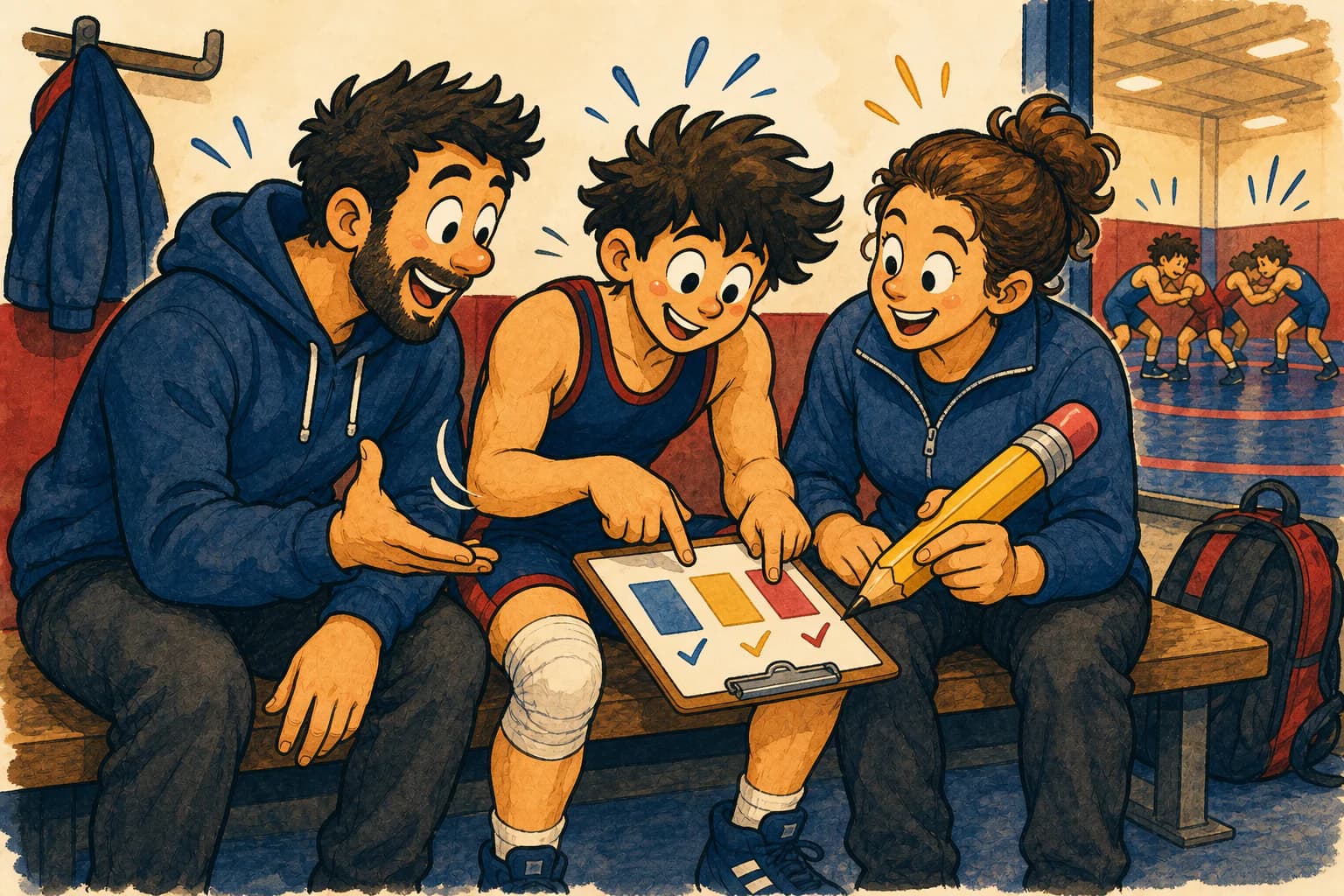
Coaches are essential because they understand the environment the athlete must re-enter. They can change constraints: speed, space, opponent behaviour, repetition, contact, work-to-rest ratio, tactical options, and total practice load. A coach should not be asked to diagnose an injury or provide medical clearance. The clinician explains the athlete's current constraints; the coach helps create meaningful sport inside them; the athlete reports what they experience.
Questions athletes can ask
- Which parts of practice can I do today?
- What is the next step, and what needs to be true before I take it?
- What should I report during the session, later today, and tomorrow morning?
- How do school, sleep, stress, and other training affect the plan?
- Who should I contact if my response is different from what we expected?
Questions coaches can ask
- What is allowed, what should be modified, and what is not ready yet?
- Can I change speed, space, repetitions, resistance, contact, or rest?
- Which responses mean hold, stop, or refer back to the clinician?
- Who is responsible for clearance and each progression decision?
- How and when should we share feedback while respecting the athlete’s privacy?
For younger athletes, a parent or guardian may also need to understand the plan. The athlete should still be included in the conversation and know what is happening, why it is happening, and how to speak up.
Prepare for what is waiting
Good rehabilitation is not a collection of clever exercises. It is a process of respecting constraints, applying enough of the right stress to create adaptation, developing the qualities that support performance, and progressively restoring the activity itself.
We cannot promise injury prevention or a setback-free path. A person can do many things wrong and improve; another can do everything apparently right and still struggle. Biology contains uncertainty. Time and sustained effort often matter more than a perfect-looking plan.
My aim is simpler: do not prepare someone only for the clinic. Prepare them for the training, work, life, or competition that is actually waiting.
Sources
References and further reading
- 2016 Consensus statement on return to sport, British Journal of Sports Medicine
- The PAASS return-to-sport framework, British Journal of Sports Medicine
- Amsterdam concussion consensus, British Journal of Sports Medicine
- Four pillars of on-field rehabilitation, Journal of Orthopaedic & Sports Physical Therapy
- The control-chaos continuum, British Journal of Sports Medicine
- IOC consensus on load and injury risk, British Journal of Sports Medicine
- Conceptual problems with the acute:chronic workload ratio, International Journal of Sports Physiology and Performance
- Psychological responses and return to sport, The American Journal of Sports Medicine
- Motor-learning principles after ACL injury, Sports Medicine
- How limb symmetry can overestimate knee function, Journal of Orthopaedic & Sports Physical Therapy
- How hop-distance symmetry can mask biomechanics, British Journal of Sports Medicine
- Pain in sport is more than tissue damage, British Journal of Sports Medicine
- Activity with a pain-monitoring model in Achilles tendinopathy, The American Journal of Sports Medicine
Explore Support
Review the option that fits the setting.
Learn about online individual kinesiology services or structured support for teams, clinics, and organizations. The appropriate next step depends on the person, goal, and setting.